


Opening View
Monday’s brief questioned whether headline corporate growth justified a broad recovery trade. Unilever’s uneven category performance argued for selectivity. By Wednesday, Dangote Cement’s newly released statements add a different test: how much of an improving company’s cash is genuinely available after funding its investment programme?
The improvement is substantial. Group operating cash flow for the nine months to September increased to N1.83 trillion from N1.29 trillion a year earlier. But lower cash payments for equipment do not mean investment requirements have fallen. Recorded capital additions increased, while the cash-flow reconciliation includes a sizeable amount of unpaid supplier credit.
Our interpretation is that the timing of investment payments deserves more weight in valuation. Supplier credit can be sensible financing. It does not, by itself, indicate overdue bills or financial stress. But it also does not turn an investment obligation into permanent cash available for dividends.
That distinction matters in a market where Tuesday’s index advance coexisted with more declining stocks than advancing ones. The evidence supports stronger company-specific opportunities, not an automatic upgrade for every industrial or consumer stock. Meanwhile, the Fed decision remains ahead of this edition’s cutoff: a firmer equity market is not yet evidence of cheaper dollar funding
The Big Picture:
What changed since Monday:
Corporate analysis has moved from sales composition to investment funding. Monday’s consumer-sector test concerned where growth came from. Dangote Cement’s new disclosure adds a question about when expansion must be paid for. Neither test can be answered by headline profit alone.
The equity rebound has strengthened, but participation remains uneven. Tuesday extended Monday’s advance. The continued gap between heavyweight gains and market breadth argues against treating the index as a verdict on every portfolio holding.
Cash availability has improved ahead of the bill-pricing test. Tuesday’s liquidity reports show a larger banking-system surplus. Today’s Treasury-bill auction outcome was not independently verified for this cutoff, so abundant cash cannot yet be translated into a confirmed fall in auction rates.
Global relief has not settled the financing question. US shares were steadier in Wednesday trading, but Treasury yields edged higher and oil reversed part of Tuesday’s decline. The Fed announcement and Thursday’s US data remain unresolved tests.
Nigeria Market Intelligence
Dangote Cement: Read the Investment Payment Schedule
The company’s group cash-flow statement separates the assets being added from the cash already paid. All figures below cover the same nine-month periods and are in N billion.
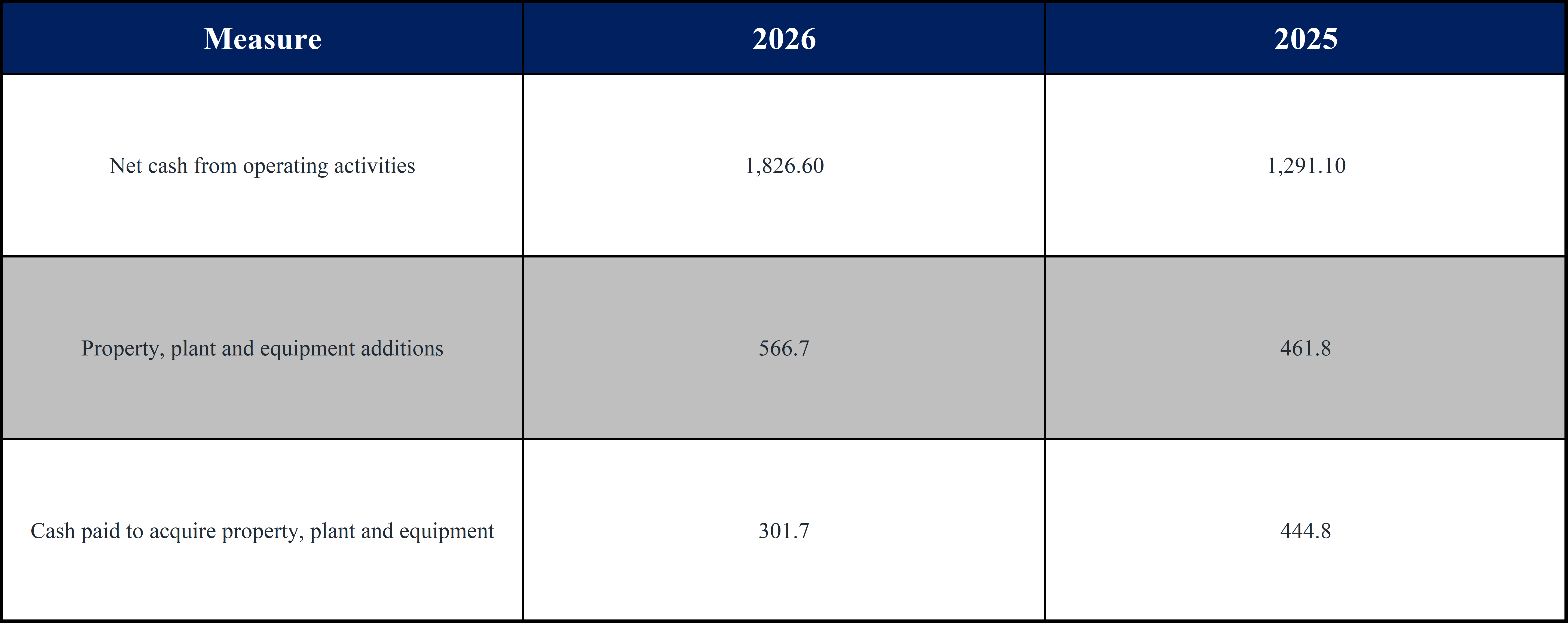
The statement’s reconciliation is instructive: N566.7 billion of additions, plus N3.7 billion absorbed by changes in equipment prepayments, less N268.7 billion of net unpaid supplier credit, produces N301.7 billion of cash payments. Lower cash expenditure therefore coexists with more recorded investment.
Operating cash also includes a N259.9 billion inflow from changes in prepayments and other current assets, against N9.8 billion in the comparable period. That contribution should not simply be annualised. Interest paid is classified separately within financing activities, so operating cash is not cash available to equity holders.
The investment question is whether new capacity can generate returns before the associated payments fall due. The supplier-credit repayment schedule was not verified; the statement does not establish that these bills are overdue. Investors should assess payment timing, debt service and expected returns before treating stronger cash generation as dividend capacity. This is a valuation test, not a new entry recommendation.
2. Equities: Industrial Leadership Is Not Broad Confirmation
The NGX All-Share Index closed Tuesday at 253,990.06, up 1.07% from Monday’s close. There were 20 gainers against 36 decliners. The industrial index gained 5.50%, compared with 0.05% for consumer goods and 0.01% for banking.
The implication is concentration: index strength offers little protection against weak earnings or poor liquidity elsewhere. Watch whether participation broadens, rather than extrapolating the strongest heavyweight’s move.
3.Funding and FX: Better Liquidity Still Needs a Price
AIICO’s Tuesday report put the banking-system liquidity surplus at N9.35 trillion, while secondary Treasury bills changed little and its bond-market assessment was mostly flat with light trading. These are dated market references, not executable investment terms. Reported official-market naira appreciation on Tuesday likewise establishes a session’s improvement, not a lasting FX trend.
The advertised N800 billion Treasury-bill offer was scheduled for today, with settlement on Thursday. .
Global Market Intelligence
1. The Fed Has Not Yet Delivered the Answer
At 16:45 WAT on Wednesday, the S&P 500 was up 0.2% and the Nasdaq was broadly flat; Treasury yields had edged higher. The Fed announcement is scheduled for 19:00 WAT, after this edition’s cutoff.
For Nigerian borrowers and holders of Nigerian sovereign USD Eurobonds, a policy pause would not automatically lower longer-term dollar yields. The US interest-rate component and Nigeria’s credit spread must be assessed separately. Refinancing decisions require an all-in funding quote, not simply a reassuring policy headline.
2. Oil Has Rebounded, Reopening the Cost Question
Brent crude futures traded at US$115.66 a barrel at 16:00 WAT on Wednesday, after falling on Tuesday. This is an intraday reference, not a settlement price.
Higher oil can support export receipts if production and collections hold up. For manufacturers, transport operators and importers, however, it can also raise replacement costs. A favourable sovereign oil narrative is not automatically a favourable corporate margin narrative.
3. Gold’s Bounce Is Not a Rate-Cut Signal
Gold rose on Tuesday despite a firmer dollar. That is a useful reminder that commodity and currency exposures need not move together. Thursday’s US GDP and PCE inflation releases could still alter the financing outlook after the Fed announcement. Gold’s rebound alone does not establish that inflation pressure or the cost of holding a non-income-producing asset has eased durably.
Asset Class Implications
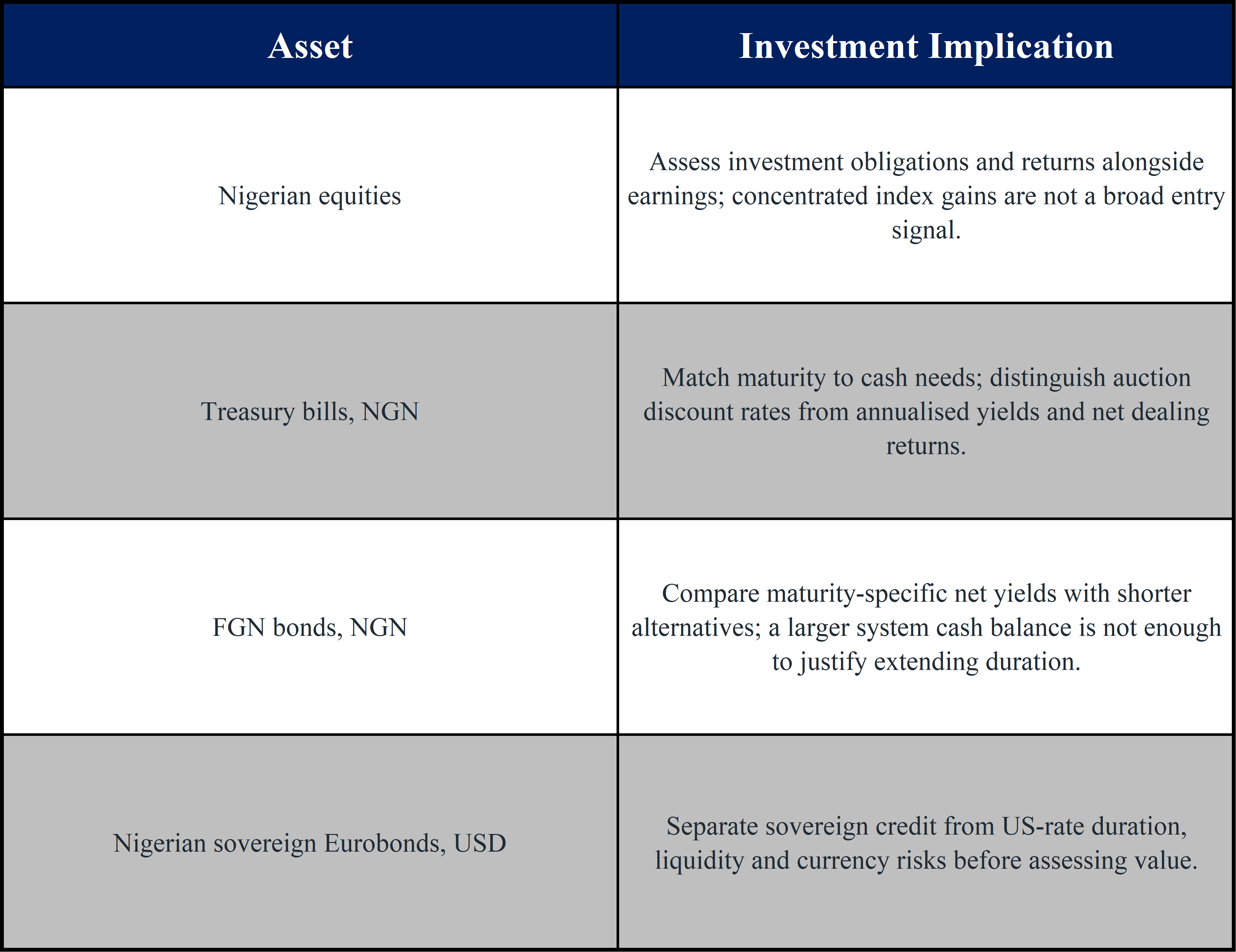
The distinction is between stronger reported performance and the terms available for a new investment.
Ranora View:
The stronger industrial earnings story deserves attention, but capital allocation should be judged after the investment payment schedule is understood. Dangote Cement’s cash improvement is meaningful; the gap between capital additions and cash expenditure is equally relevant to what shareholders can ultimately receive.
We would favour evidence of returns on new capacity and manageable payment commitments over a valuation argument based only on current cash generation. Monday’s Unilever candidate remains a deferred entry: the approaching dividend qualification date does not resolve valuation, dealing-cost and eligibility checks. There is no material investment-idea change to announce on the evidence verified.
What to Watch Next
Wednesday, 19:00 WAT: the Fed decision and subsequent Treasury-market response, especially whether longer-term funding costs follow the policy signal.
Thursday, 29 October: settlement of today’s Treasury-bill auction and secondary-market repricing, assessed against verified allotments and stop rates.
Thursday, 13:30 WAT: US third-quarter GDP and September PCE inflation, and their implications for dollar funding.
Friday, 30 October: Airtel Africa’s half-year results, with attention to cash generation, investment spending and financing requirements.
Friday, 30 October: Unilever’s dividend qualification date. Confirm settlement eligibility; the date alone does not guarantee entitlement for a new purchase.
Question for the day:
How much weight do you give stronger operating cash flow before a company’s investment payment schedule is clear?
Stay smart. Stay informed. Subscribe to Ranora Market Outlook for free and support independent market analysis.