


Market Overview
Good evening and welcome to today’s market update, This edition highlights a dynamic intersection of opportunity and caution across Nigerian and global markets. Domestically, policy-driven reforms, capital market strength, and strategic investments in agriculture and energy signal a strengthening economic foundation. Globally, however, geopolitical tensions and supply disruptions are driving volatility across commodities and financial markets. Key themes this week include Nigeria’s push for food security and capital market resilience, alongside rising global energy risks and shifting investor sentiment.
Nigerian News & Market Update
World Bank approves $500 million loan for Nigeria’s agriculture sector:
The World Bank has approved a $500 million IDA loan for Nigeria’s AGROW project to boost agricultural productivity, strengthen value chains, and improve food security. The initiative will support up to 1 million smallholder farmers, enhance market access, and attract private sector investment into key crops like rice, maize, cassava, and soybeans. Running from 2026–2032, the programme aims to drive job creation, modernise farming systems, and address structural challenges such as low yields and climate vulnerability. - Nairametrics
Tinubu appoints Dalhatu Abubakar as Nigeria Commodity Exchange Chairman, names board:
President Bola Ahmed Tinubu has appointed Dalhatu Abubakar as Chairman of the Nigeria Commodity Exchange and reconstituted its board to strengthen commodity trading and boost non-oil exports. The new board includes key non-executive directors and a Managing Director, tasked with improving market transparency, price discovery, and attracting investment into the sector. The move aims to stabilise food prices, enhance food security, and position Nigeria more competitively in regional and global commodity markets. - Nairametrics
Fidelity Bank shows exceptional performance as banks conclude recapitalisation:
Fidelity Bank Plc delivered standout performance during Nigeria’s recapitalisation, with heavily oversubscribed offers reflecting strong investor confidence. The bank exceeded the ₦500 billion capital requirement, strengthened its capital buffers, and attracted major institutional investors, positioning it for expansion. - Nairametrics
Oando expands into Angola with 45% stake in Kwanza Basin Block:
Oando Plc has acquired a 45% stake in Angola’s Kwanza Basin Block KON 13, marking its first operated upstream venture outside Nigeria. The deal expands its pan-African footprint, following its recent acquisition of Nigerian Agip Oil Company, and positions it as operator of the asset. The move supports geographic diversification and growth, with early oil indications reducing exploration risk and boosting long-term reserve potential. - Businessday
Nigeria Sectoral Indices Performance
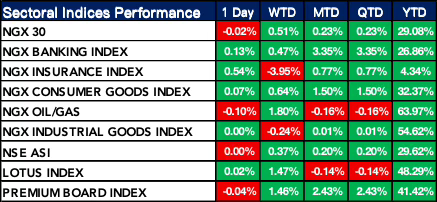
The table below shows that, Market performance was mixed, with the NGX 30 slipping slightly on the day but maintaining a modest month-to-date and year-to-date gain. Banking and insurance stocks showed relative strength, supporting broader market resilience despite pockets of weakness in oil/gas and consumer goods. Overall, year-to-date returns remain solid across most indices, reflecting sustained investor confidence amid short-term volatility.
Fixed Income (FGN Bonds)
Global News & Market Update
Russia bans producers from exporting gasoline until end-July:
Russia has banned gasoline exports by producers until end-July to stabilize domestic supply during peak agricultural demand and rising global oil prices. The restriction excludes countries with existing inter-governmental fuel supply agreements, such as Mongolia. The move follows past fuel shortages and is part of recurring efforts to control prices and ensure adequate domestic availability. - Reuters
Trump’s fresh Iran threats give investors a risk-off reality check:
Fresh threats from Donald Trump to escalate the Iran conflict have rattled global markets, dashing hopes for a quick resolution. Oil prices surged while stocks and bonds fell, as investors shifted to safe-haven assets and the dollar strengthened. - Reuters
India ends import tax on petrochemicals to help local industry:
India has scrapped import taxes on 40 petrochemical products until June 30 to ease supply disruptions and support local industries. The move follows a government directive to divert domestic petrochemicals toward LPG production amid shortages linked to the Iran conflict. The tax relief aims to reduce cost pressures on plastics and pharmaceutical sectors facing rising feedstock prices and tighter supply. - Reuters
Maldives seeks fuels from India amid Iran war:
The Maldives is seeking fuel supplies from India as Middle East disruptions strain energy imports. Shipping through the Strait of Hormuz remains blocked, delaying Indian vessels and tightening regional supply. India is reviewing the request while balancing domestic needs and expanding fuel support to neighbouring countries. - Reuters
Indices, Commodities & Currencies
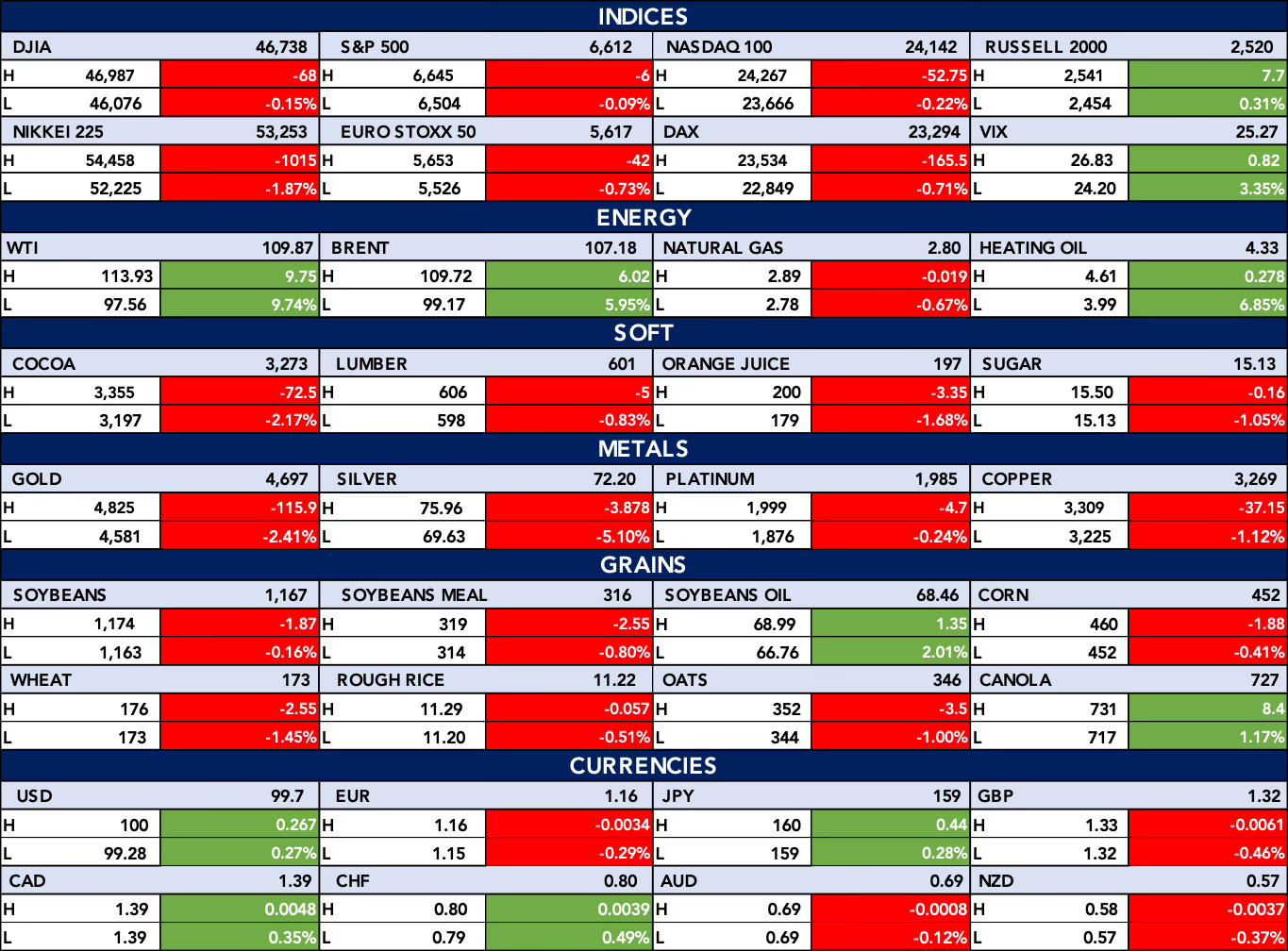
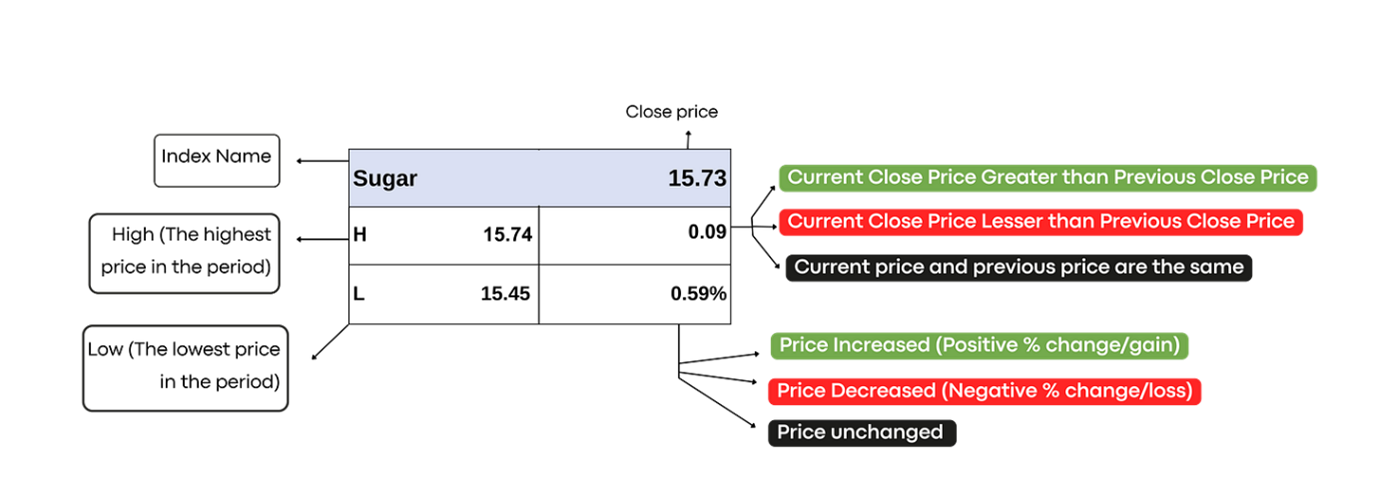
The table below shows Global markets traded mostly lower, with declines across major indices including the DJIA, S&P 500, and European benchmarks, while the Russell 2000 showed relative resilience and volatility (VIX) ticked higher. Energy prices remained firm, led by gains in WTI and Brent crude, while metals and soft commodities broadly weakened, highlighting mixed demand signals across asset classes. In currencies, the US dollar held steady with slight strength, while movements in the yen and Swiss franc suggested cautious positioning amid ongoing market uncertainty.
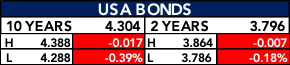
Fixed Income (USA Bonds)
Events

Conclusion
Nigeria’s outlook remains cautiously optimistic, supported by structural reforms, strong banking sector capitalization, and increased investment in agriculture and commodities. However, global headwinds, particularly geopolitical tensions and energy supply disruptions may sustain market volatility in the near term. Investors should watch for inflationary pressures, oil price movements, and FX stability, while positioning toward fundamentally strong sectors like banking, agriculture, and energy. In the coming weeks, a balance between domestic resilience and external risks will likely shape both returns and capital flows.
Thanks for reading Ranora Consulting! Subscribe for free to receive new posts and support my work.