


Opening View:
The most useful warning for Nigerian equity investors this week came from outside Africa. MSCI proposed moving Indonesia from Emerging Market to Standalone status, citing concerns about ownership transparency, trading behaviour and reform implementation. This remains a consultation, not a completed reclassification. The message is that access to an institutional buyer base can become a valuation risk before the underlying businesses report different earnings.
For Nigeria, that distinction matters after FTSE Russell’s September return to Frontier status. The two providers and country cases are different; Indonesia’s problems should not be imputed to Nigeria. But index eligibility alone does not establish how much stock an investor can buy, sell or repatriate under pressure
Our interpretation: liquidity deserves a place beside earnings in Nigerian equity valuation. A business can perform well while its shares remain difficult to exit at the quoted price. For investors, the question is not simply whether Nigeria deserves more foreign capital. It is which securities can accommodate that capital without making the exit dependent on another wave of enthusiastic buyers.
The Big Picture:
September’s question was whether index inclusion would attract buyers. This week’s new warning is that eligibility must be maintained through functioning markets. The implication is not an automatic transfer of money from Indonesia to Nigeria. It is a higher investment hurdle: identifiable ownership, genuinely tradable shares, reliable settlement and demonstrated FX access. Stronger macroeconomic conditions can support valuations, but they cannot substitute for those checks.
The week’s lesson: an attractive company and an investable security are not always the same proposition. This is our interpretation of the MSCI and FTSE evidence above, not a claim of new Nigerian restrictions.
Nigeria Market Intelligence:
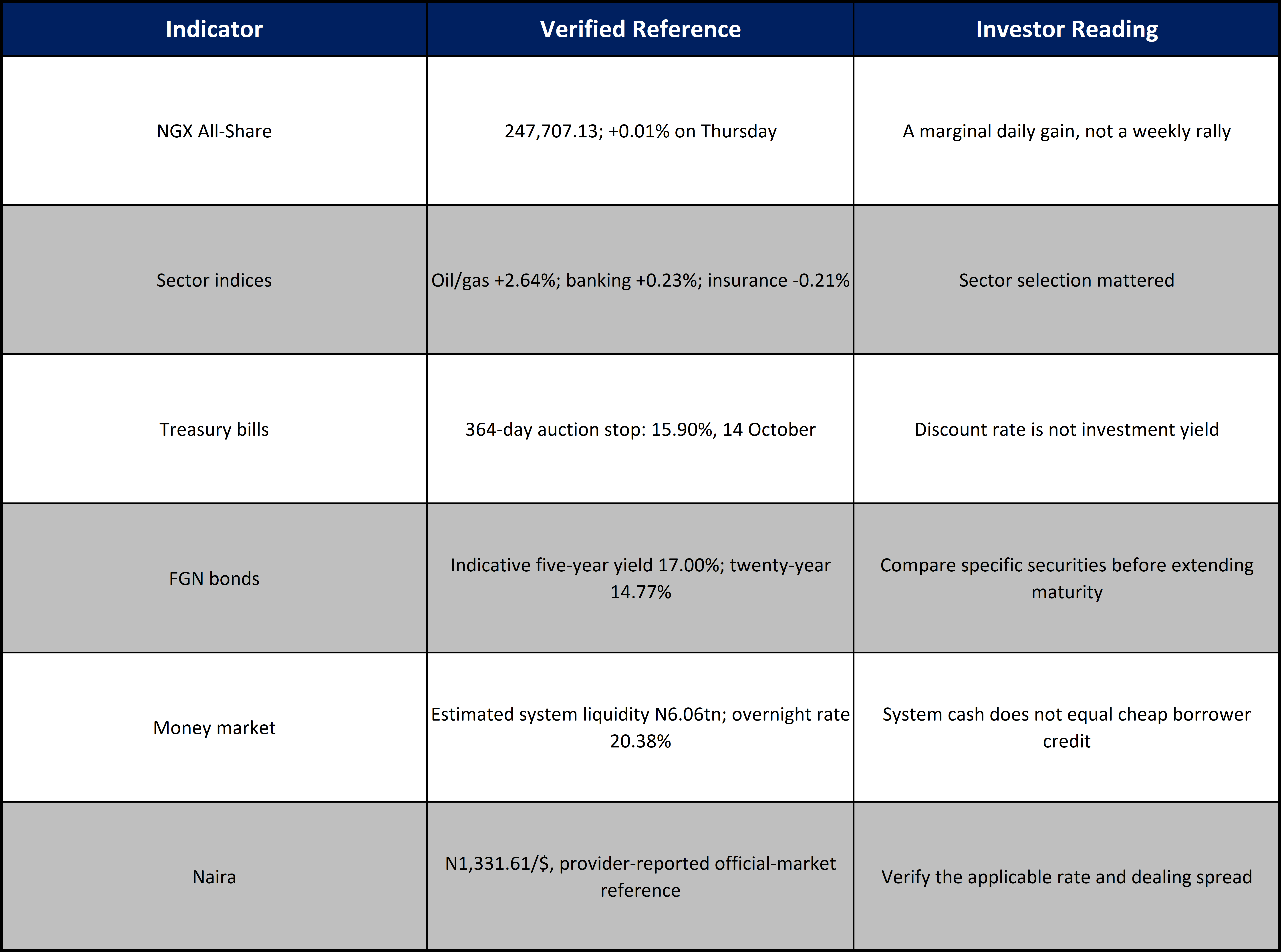
Inflation improved, but the composition matters. September headline inflation fell to 14.63% year-on-year from 15.39%. Monthly food prices fell 1.55%, while monthly core inflation rose 1.11%. That supports a more selective conclusion than broad consumer recovery: food relief can release household spending capacity, but persistent non-food pressures still matter for margins. Watch sales volumes and input costs before upgrading consumer earnings.
The bill auction interrupted the falling-rate narrative. The 14 October auction’s 364-day Treasury-bill stop rate rose five basis points to 15.90%, according to corroborating market reports. This is an auction discount rate, not the investor’s annualised yield. Importantly, the auction preceded Thursday’s inflation release, so it is not a post-inflation policy verdict. Income investors should compare fresh net returns across maturities rather than assume every auction will clear lower. Watch Monday’s bond pricing and subsequent secondary-market quotes.
Equity gains are not proof of foreign buying. Reports available this week put foreign investors’ share of August NGX transactions at 4.89%. That is a pre-FTSE baseline, not evidence about September or October flows, and trading share is not foreign ownership. Thursday’s divergent sector moves likewise cannot identify who supplied the money. Watch post-reclassification participation data and sustained turnover before paying for an assumed foreign-demand premium.
Nigeria Market Scorecard
Global Market Intelligence:
Indonesia made market access a live investment risk. MSCI’s proposal would remove the market from its global equity benchmarks if implemented. The decision is due by June 2027, leaving a reform and consultation period. For Nigeria, the actionable lesson is to assess mandate eligibility and ownership disclosure stock by stock, not to assume an emerging-market setback creates frontier-market inflows. Watch implementation evidence and investor responses.
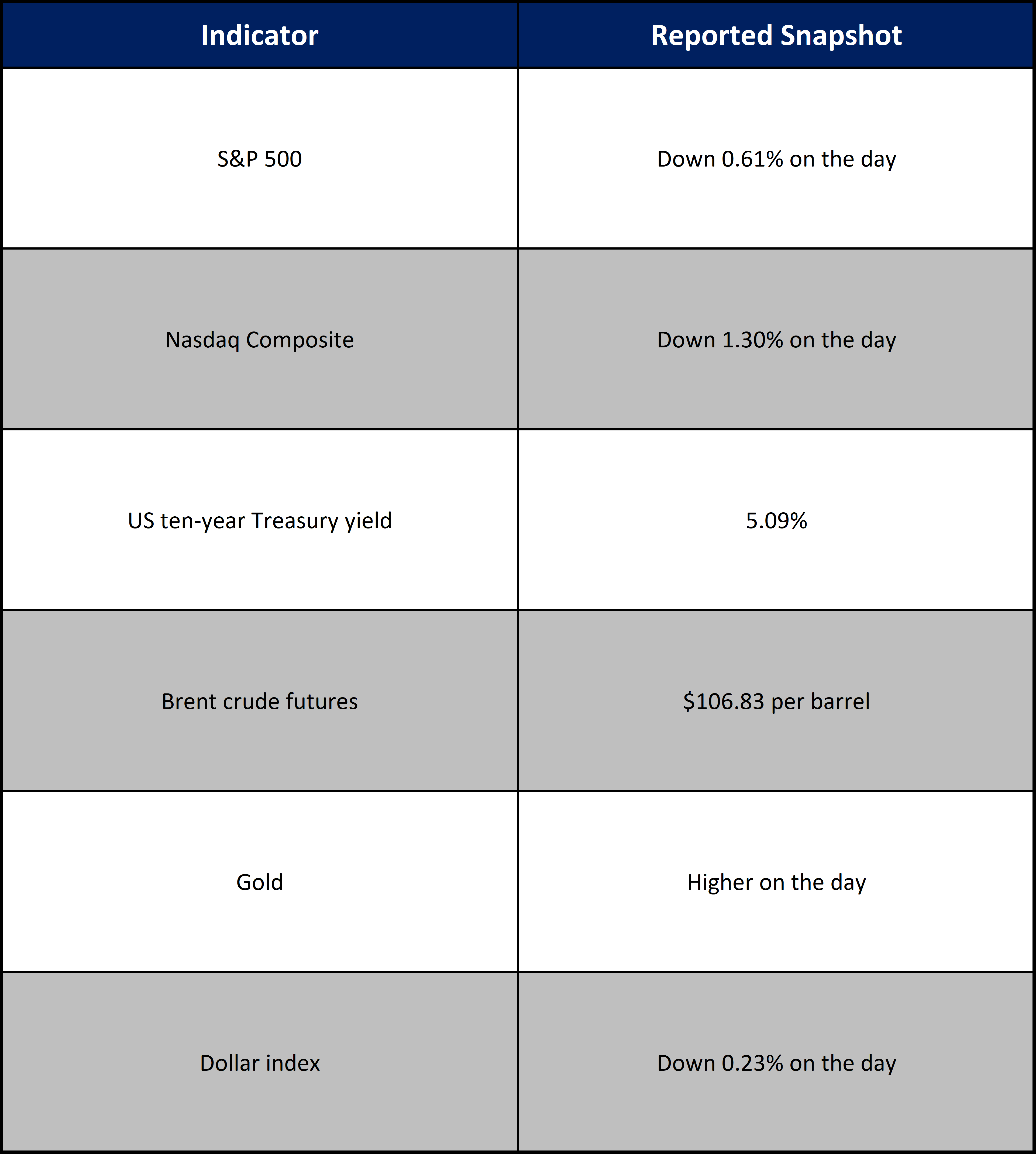
Lower Treasury yields did not resolve equity financing concerns. US September CPI rose 3.7% year-on-year and 0.6% month-on-month, the latter seasonally adjusted. Yet government bonds subsequently attracted demand while AI financing worries weighed on equities. Our inference: cheaper benchmark debt need not mean cheaper credit for a risky borrower. Nigerian dollar issuers should compare all-in funding terms; Eurobond investors should separate sovereign credit spreads from US rate exposure. Watch credit pricing and cash-generation guidance.
Oil remains a divided Nigerian exposure. Friday’s Brent reference remained above $100 a barrel. Higher crude can support export receipts and upstream cash generation, but it can also burden fuel users and household budgets. The balance depends on production, collections and cost pass-through, not Brent alone. Watch realised Nigerian output and domestic fuel pricing rather than treating expensive oil as an economy-wide equity buy signal.
Global Market Scorecard
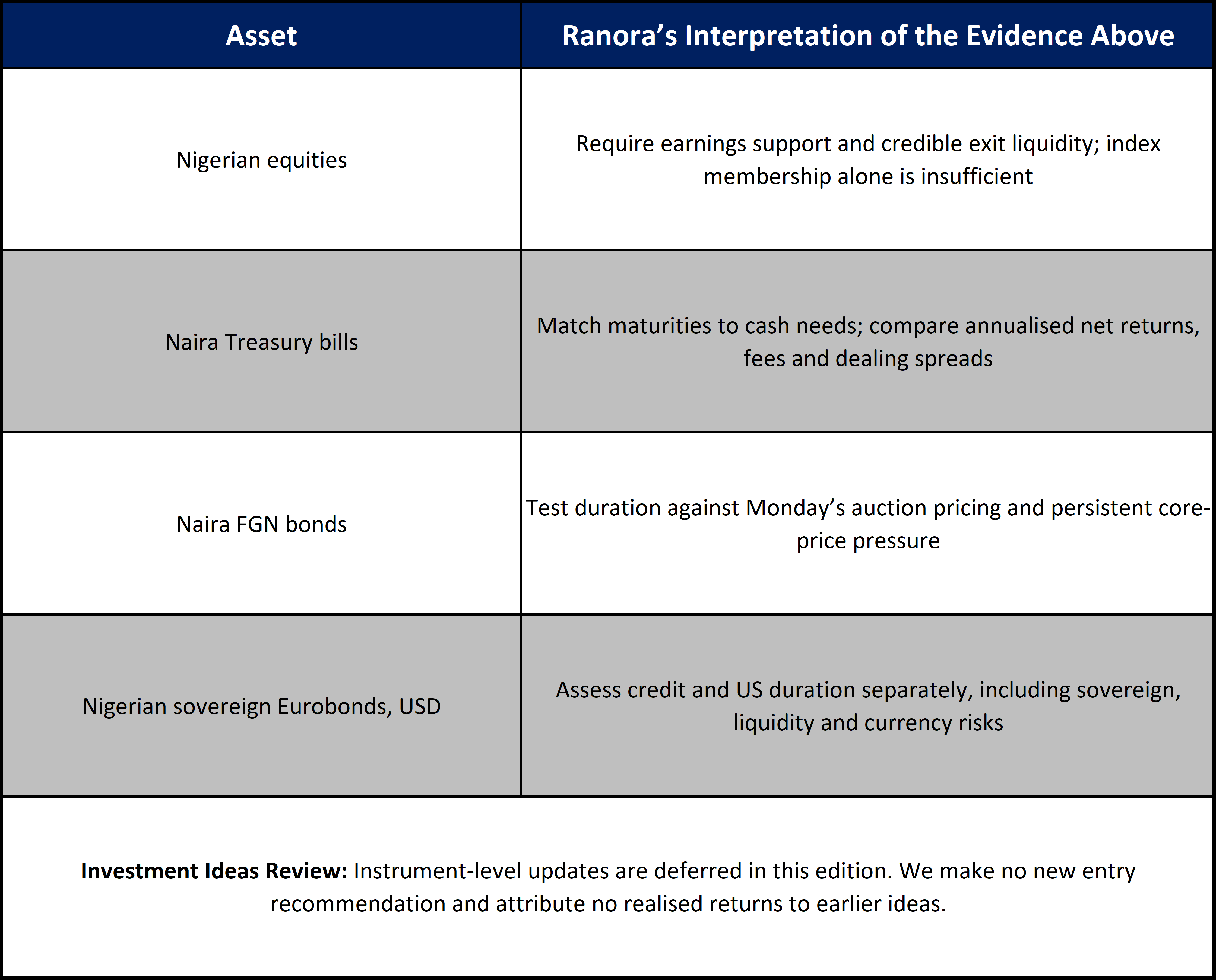
Asset Class Implications
Ranora View:
We favour valuation discipline that explicitly prices liquidity. For Nigerian equities, a stronger earnings outlook should not automatically justify a higher multiple where tradable supply, ownership disclosure or exit capacity is unclear. For income assets, the practical decision is maturity and net return, not a mechanical response to the inflation headline. Monday’s bond auction can test what investors will actually accept after the CPI release. We would become more constructive on broad equity exposure with sustained trading depth, stronger earnings conversion and verified post-reclassification participation. Until then, assess issuers individually rather than buying an index-access narrative. This is Ranora’s interpretation of the evidence above.
What to Watch Next:
Monday 19 October: FGN bond auction clearing yields and accepted volumes; Wednesday 21 October: settlement and funding conditions.
Nigerian equity disclosures: Post-FTSE foreign participation, ownership transparency and persistent turnover.
Friday 23 October: Scheduled US flash PMIs, particularly prices and new orders,
Energy transmission: Nigerian fuel prices, upstream production and operating-cost commentary, to test whether oil benefits or erodes company cash flow.
Question of the day:
What would persuade you to pay a higher valuation for a Nigerian stock: stronger earnings, deeper trading liquidity, or demonstrably easier FX repatriation?
Stay smart. Stay informed. Subscribe to Ranora Market Outlook for free and support independent market analysis.