


Opening View:
This week’s Nigerian investment opportunity is less about a broad market rebound than about which companies can turn outstanding claims into usable cash. Nigerian Bulk Electricity Trading (NBET) says payments to participating electricity generators and gas suppliers have begun following its Series 2 bond issuance. That moves the story from raising finance towards implementing settlements. It does not establish how much cash individual companies have received.
The distinction matters because legacy-debt recovery can strengthen a balance sheet without creating equivalent recurring earnings. Cash received could fund gas purchases, maintenance or debt reduction. Bonds received instead of cash carry a different timetable and may require sale or financing before they support operations. Investors should therefore examine the settlement instrument and the recipient’s intended use of proceeds before upgrading valuations.
Elsewhere, the Treasury-bill auction delivered only a small further reduction in the one-year stop rate, while global fund flows showed different appetites for emerging-market debt and equities. Together, these developments favor identifiable cash flows over a general bet on easier money.
The Big Picture:
Ranora’s central distinction is between repairing past damage and financing future growth. Settling an old invoice may reduce receivables and borrowing needs; it does not automatically improve the economics of the next invoice. For power-sector investors, the stronger case would combine actual receipts, lower financing pressure and reliable payment for new supply. For industrial businesses, cheaper or more dependable electricity remains a potential second-stage benefit, not something to put into next quarter’s budget yet. This is Ranora’s interpretation of AFC’s 23 September settlement disclosure above, not a forecast of immediate operating improvement.
Nigeria Market Intelligence:
1. Power settlements need a recipient-level cash test. Series 2 comprises N402bn raised through cash bonds and N326.98bn in non-cash bonds allotted to participating generators. Neither the N4tn programme envelope nor the full issue size is a verified measure of cash received this week. The investable question is what each recipient actually receives, on what terms, and whether new arrears continue accumulating. Watch: company disclosures of settlement receipts, debt repayment and current invoice collection.
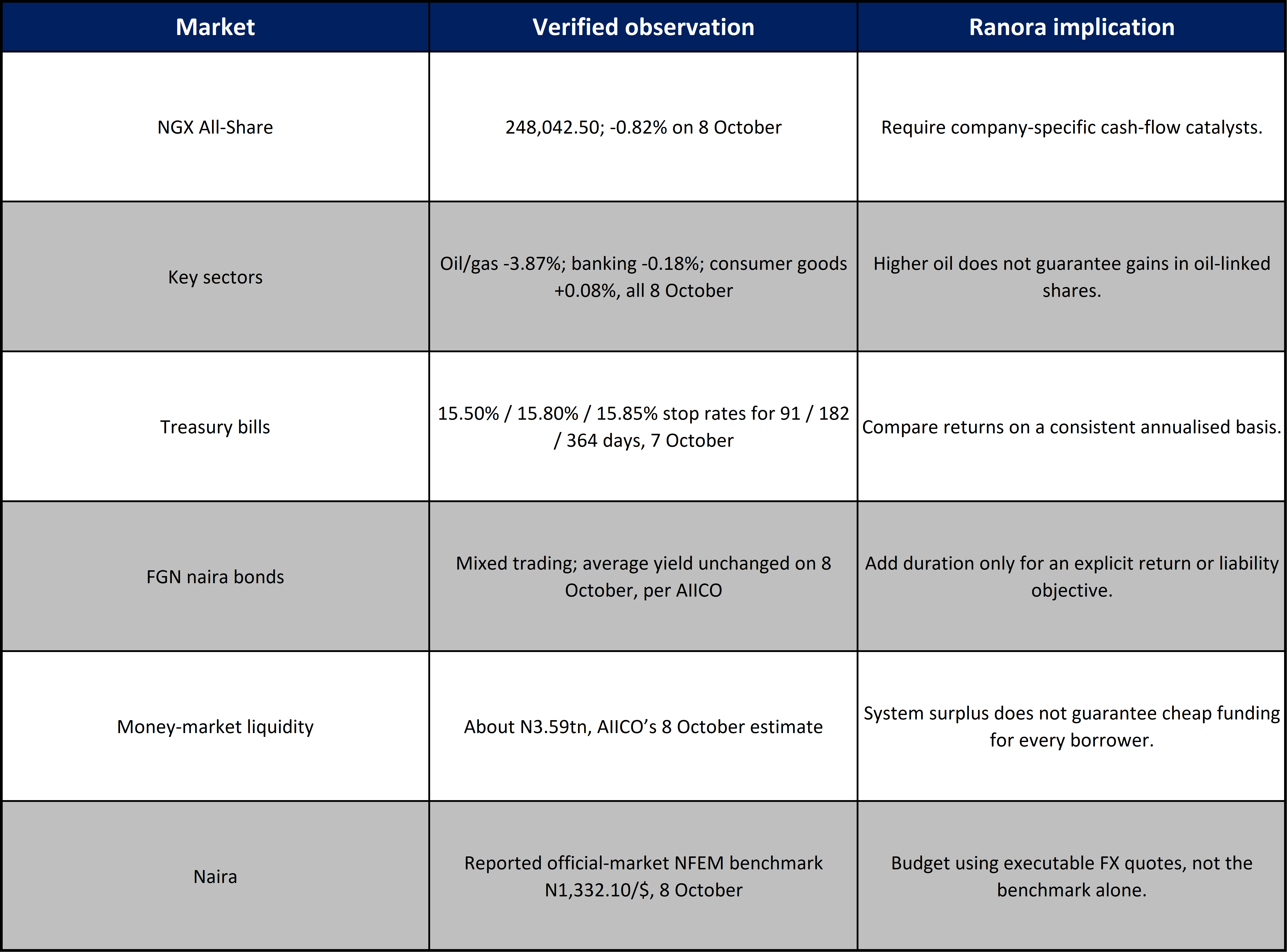
2. Bills still offer income, but rapid repricing is not assured. Wednesday’s auction allotted N968.47bn against N900bn offered. The 364-day stop rate slipped just four basis points to 15.85%; the 91-day and 182-day rates held at 15.50% and 15.80%. The government absorbed additional demand without a large price adjustment. The implication is to compare executable annualised returns and match maturities to cash needs, rather than assume another sharp fall in rates.
Watch: post-settlement secondary quotations and subsequent CBN liquidity operations.
3. Airtel Money offers price discovery, not automatic parent cash. Conditional London trading began on Friday; Airtel Africa says it is not selling existing shares in the offer. A separate quoted value can sharpen analysis of the parent’s retained interest but does not by itself establish undervaluation or fresh funding for the parent.
Watch: expected unconditional dealings on 14 October and whether the valuation remains persuasive after ownership and debt are accounted for.
Global Market Intelligence:
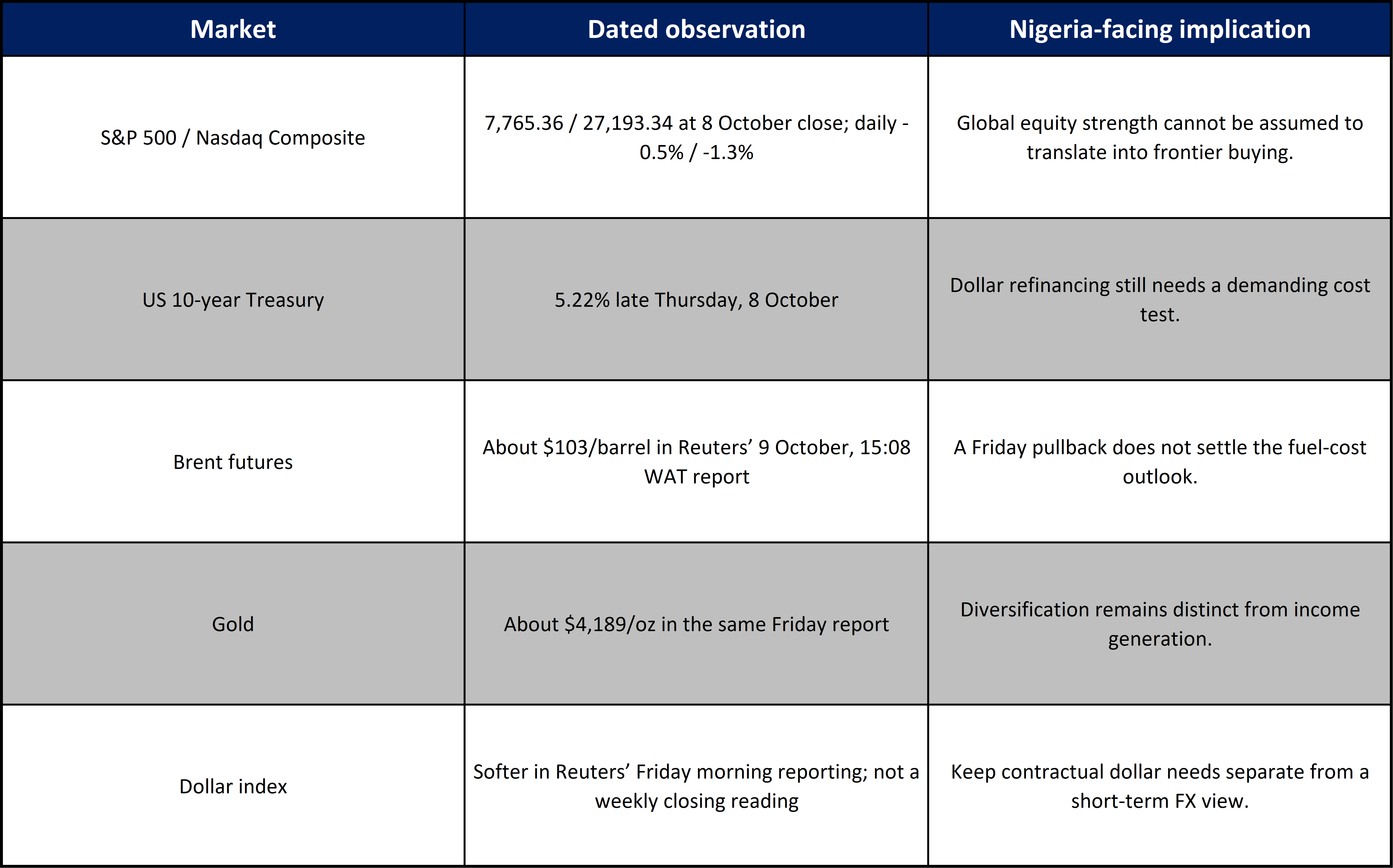
1. The Fed has not removed the refinancing hurdle. Minutes released on Wednesday showed most participants at the September meeting considered another rate increase likely appropriate by year-end, conditional on subsequent information. That is a dated policy assessment, not a new decision this week. For Nigerian dollar borrowers, refinancing plans should withstand expensive benchmark rates even if domestic rates soften.
Watch: next week’s US inflation releases.
2. Foreign demand is divided by asset class. LSEG Lipper data showed $153.81bn entering global money-market funds in the week ended 7 October. Emerging-market bond funds received $1.48bn, while emerging-market equity funds lost $752m. This is not a uniform withdrawal from emerging markets, but neither is it evidence of buying Nigerian assets.
Watch: country-specific subscriptions and actual FX conversion, not aggregate flow headlines alone.
3. Oil relief remains fragile. Brent futures settled at $104.28 a barrel on Thursday before easing in Friday trading. Nigeria’s potential export-revenue benefit must be weighed against fuel, freight and working-capital costs. Businesses should stress-test cash requirements against renewed oil strength; producers still need saleable output and realised margins to capture the upside.
Watch: physical supply disruptions and subsequent settlements.
Nigeria Market Scorecard
Global Market Scorecard
Ranora View:
Our preference is for identifiable balance-sheet improvement rather than blanket exposure to a recovery theme. For power-linked equities and credit, require evidence of recipient cash, settlement terms and payment discipline before capitalising an assumed earnings uplift. For cash allocations, match maturities and compare executable returns. For dollar liabilities, stress-test refinancing without assuming imminent Fed relief. The power thesis strengthens if receipts reduce debt and support operations; it weakens if new arrears absorb the benefit. Basis: NBET settlement reporting of 9 October, FMDA’s 7 October auction analysis and Fed minutes released 7 October, cited above; the positioning conclusions are Ranora’s interpretation.
What to Watch Next:
Power-sector receipts: recipient disclosures showing actual cash versus bonds and whether current invoices are being paid.
Airtel Money, 14 October: expected admission and unconditional dealings, subject to completion, under the 9 October RNS timetable.
US inflation: September CPI on 14 October and PPI on 15 October, both at 13:30 WAT.
Local price discovery: post-auction bill quotations, NGX breadth and company cash-flow disclosures that could justify a change in positioning.
Question of the day:
Which would give you more conviction in Nigerian power-sector investments: recovering legacy debts or evidence that new electricity invoices are being paid reliably?
Stay smart. Stay informed. Subscribe to Ranora Market Outlook for free and support independent market analysis.